

Georgia
Georgia: One Year Visa-Free in One of Europe’s Best-Kept Secrets
Sitting between Europe and Asia, Georgia offers something almost unheard of for long-term travelers: many visitors can stay for up to an entire year without obtaining a visa.
Combine that with affordable living costs, spectacular mountains, historic cities, Black Sea beaches, excellent food and wine, and Georgia becomes one of the most flexible destinations in the 90 Day Bounce strategy.
For travelers trying to spend extended periods outside the Schengen Area, Georgia isn't simply a place to kill 90 days. You may find yourself wanting to stay much longer.
Quick Visa Snapshot
🇺🇸 U.S. Citizens: Up to 1 full year visa-free
🇨🇦 Canadian Citizens: Up to 1 full year visa-free
🇬🇧 UK Citizens: Up to 1 full year visa-free
🇦🇺 Australian Citizens: Up to 1 full year visa-free
Schengen Status: ❌ Not part of the Schengen Area
Why it works for a 90 Day Bounce: Georgia is completely outside the Schengen Area, so time spent legally in Georgia does not use your Schengen 90/180-day allowance. Even better, eligible U.S., Canadian, British and Australian citizens aren't limited to a 90-day Georgian stay—they can remain visa-free for up to one full year.
Why Georgia Works for a 90 Day Bounce
Georgia is one of the most flexible options for travelers who want to remain abroad for an extended period without worrying about another 90-day visitor limit.
Exceptional Visa Flexibility — The ability for eligible travelers to remain for up to one full year makes Georgia stand out from most other destinations on 90 Day Bounce.
Excellent Value — Accommodation, restaurants and everyday expenses can offer good value compared with many popular destinations in Western Europe.
Extraordinary Scenery — The Caucasus Mountains, Black Sea coast, valleys, vineyards and national parks provide enormous geographic variety.
Food & Wine Culture — Georgia has one of the world's oldest winemaking traditions, along with a distinctive cuisine that makes restaurants, markets and wineries an important part of everyday life.
History & Culture — Ancient churches, monasteries, fortresses, historic towns and centuries-old traditions give Georgia a cultural identity unlike anywhere else in Europe or the Caucasus.
Best Places to Base Yourself



Tbilisi
The capital and best all-around choice for a longer stay. Tbilisi offers restaurants, cafés, shopping, good public transportation and a large international community.
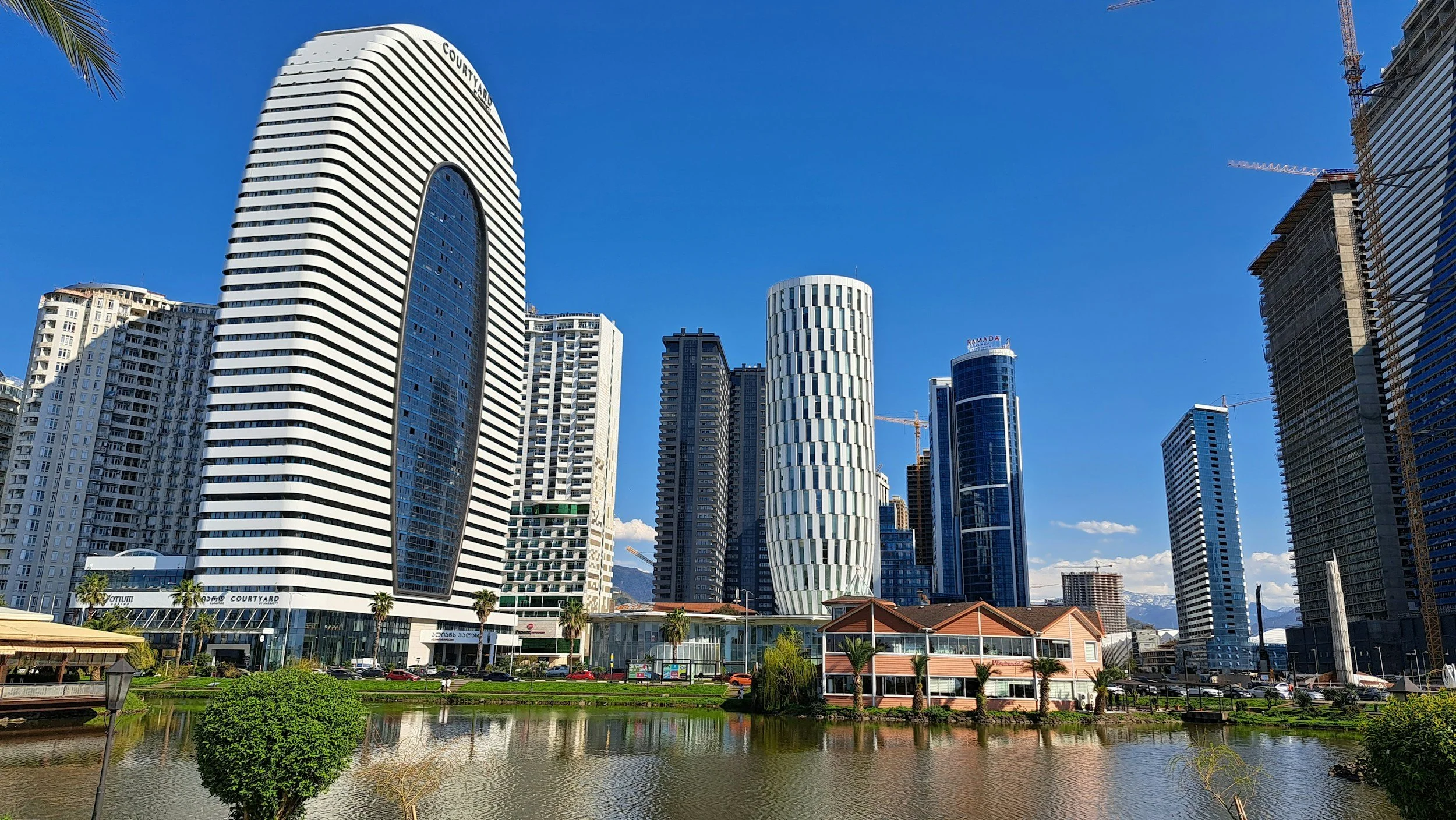
Batumi
A modern resort city on the Black Sea. Batumi is a good choice if you prefer coastal living, especially during the warmer months.
Kutaisi
Smaller, quieter and generally less expensive than Tbilisi or Batumi. Kutaisi also has useful low-cost flight connections with Europe.
Telavi
Best for wine country and a quieter lifestyle. Located in the Kakheti wine region, Telavi is surrounded by vineyards, traditional wineries, mountain scenery and historic sites.
What Will 90 Days Cost?
Georgia is one of the more affordable destinations on the 90 Day Bounce list, although costs can be higher in central Tbilisi and during the summer season in Batumi.
Accommodation: €500–€1,000/month
Food & Groceries: €250–€450/month
Local Transportation: €30–€100/month
Dining & Entertainment: €150–€350/month
Phone & Internet: €20–€40/month
Estimated 90-Day Budget
Budget Traveler: €2,500–€3,500
Comfortable Stay: €3,500–€5,000
Higher-End Stay: €6,000+
90 Day Bounce Pro Tip: Accommodation is usually the biggest variable. Monthly rentals can be dramatically less expensive than paying nightly rates, particularly outside July and August.
Getting There & Getting Around
Georgia is farther from Western Europe than most of the Balkan destinations featured on 90 Day Visa Bounce, but good air connections make it surprisingly accessible.
By Air — Tbilisi International Airport is Georgia's primary international gateway. Kutaisi International Airport is particularly useful for lower-cost European connections, while Batumi Airport serves the Black Sea region.
By Car — Georgia can be explored extensively by road, although mountain roads and driving conditions can vary considerably. A car provides excellent flexibility for wine regions, smaller towns and rural destinations.
By Train — Passenger rail connects several major destinations, including Tbilisi and Batumi, and can be a comfortable way to travel between the capital and the Black Sea.
By Bus & Minibus — Buses and marshrutkas connect cities and towns throughout the country and remain an important part of Georgia's transportation network.
Getting Around Georgia — Tbilisi has extensive public transportation, while taxis and ride-hailing services are widely used. For mountain areas and remote attractions, organized transportation or a car can be considerably more practical.
Practical Information for a Longer Stay
Healthcare — Private hospitals, clinics and pharmacies are readily available in Tbilisi and other larger cities. Travelers should carry appropriate travel or international health insurance.
Money — Georgia uses the Georgian lari (GEL). Cards are widely accepted in Tbilisi, Batumi and other larger cities, but carrying some cash is useful when traveling in smaller communities and rural areas.
Mobile & Internet — Local SIM cards, mobile data and broadband internet are widely available and generally affordable, making Georgia practical for remote work and extended stays.
Language — Georgian is the official language and uses its own distinctive alphabet. English is increasingly common among younger Georgians and in tourist-oriented businesses, while Russian is also understood by some residents.
Everyday Living — Tbilisi and Batumi offer modern supermarkets, pharmacies, gyms, cafés, restaurants, shopping centers and most conveniences needed for an extended stay.
Safety — Normal travel precautions apply. Travelers should check current government travel advisories and understand that the regions of Abkhazia and South Ossetia present special political, border and security considerations.
90 Day Bounce Pro Tip: Georgia can work particularly well for travelers who want more flexibility than a traditional 90-day destination provides. If your European plans change—or you simply decide you want to stay longer—you have considerably more breathing room than in most countries featured on this site.
How Georgia Fits Into Your 90-Day Bounce
Georgia can be an excellent place to spend time outside the Schengen Area while waiting for earlier Schengen days to fall outside your rolling 180-day window.
Example Rotation
Days 1–90: Italy, France, Greece or other Schengen countries
Days 91–180: Georgia
Day 181 onward: Potential return to the Schengen Area, depending on your individual Schengen travel history and available days.
Important: The Schengen rule is based on a rolling 180-day period. Simply spending 90 days outside Schengen does not automatically guarantee that you have another full 90 days available. Your exact entry and exit dates matter.
90 Day Bounce Pro Tip: Georgia eliminates one of the biggest pressures of a traditional 90-day bounce: You don't necessarily have to leave after another 90 days.
That makes it particularly useful for travelers who want flexibility rather than constantly planning around two different 90-day deadlines.
Always calculate your available Schengen days before booking your return. Use our Schengen Calculator to check your dates.
Official Visa Information
Visa and entry requirements can change. Always confirm current requirements with official government sources before making travel plans.
Official Georgia Visa & Entry Information
Ministry of Foreign Affairs of Georgia
Last Verified: August 2026
Important: 90 Day Bounce provides travel-planning information and does not provide legal or immigration advice. Entry decisions are ultimately made by the relevant border and immigration authorities.